You Can Drive! Now What? Things Nobody Tells You About Owning a Car

Updated: Jun 16
You may have passed your driving test years ago, or maybe fairly recently. But there are so many firsts when it comes to owning a car and being on the road, and until you're in the situation, often you have no idea what to do.

Whenever I'm having car trouble, it tends to go something like this:
Cute voice = on, phone = out, and I dial my emergency contact number.
"Da-ad..." (I like to imagine fluttering my eyelashes helps, even though he can't see me and it definitely doesn't).
But here's the thing, there are so many things you often aren't told to do when you own a vehicle that you probably, definitely should. The obvious legal things, such as paying road tax, insuring and MOTing your car, are one thing. But tell me why organising breakdown cover isn't first on most people's lists? If you haven't done so, I highly recommend it. If you break down before taking out cover, most providers won't cover that existing issue.
In this guide, we'll cover:
The basic vehicle checks every driver should know how to do.
What common dashboard warning lights actually mean.
How to fill up your car with fuel without questioning all of your life choices.
Motorway driving tips, from slip roads to missing your exit.
Why multi-storey car parks seem designed to test your patience.
What to do if you receive a parking ticket.
What happens if you're caught speeding in the UK.
Things to look for when buying a car.
The difference between Category S and Category N vehicles.
Why vehicle tax doesn't transfer when you buy a car.
How to decide whether it's time to repair your car or replace it.
If you're currently staring at a warning light, comparing insurance quotes, or wondering whether everyone else knows something you don't, you're in the right place.
As part of your driving test, you have 'show me, tell me' questions. But the 'show me' questions are simple things such as 'roll down the passenger window'. (Fun fact; during my driving test I was so nervous that I didn't want to take my eyes off the road at all. So I guessed and rolled down the back windows.... still passed though!)
I never had a 'show me/tell me' question relating to the engine, and even if I had been, they were pre-rehearsed answers. I knew where the dipstick was, I knew what I was doing in theory, but I'd never actually done it. Nor had I ever filled up my windscreen wiper fluid, or my engine oil. I was the person that didn't know there were different types of engine oil... I'm not a car girly, okay? I only learnt because when I went to buy some there were so many options that I called my petrol head friend who just laughed at me.
I'm not going to pretend to understand mechanics. If you start talking to me about spark plugs, cylinders or whatever else lives under the bonnet, you've lost me.
But there are a few things every driver should know how to check, because unfortunately cars don't come with a warning that says, "Hi, I'm about to become an expensive problem."
Things like:
Oil levels
Windscreen washer fluid
Tyre pressure
Tyre tread
Coolant
Wiper blades
None of them are particularly difficult, but they're the kind of things nobody teaches you once you've passed your test.
Dashboard Warning Lights Are Not Decorative
The first time a warning light appeared on my dashboard, I stared at it for a solid five minutes hoping it would disappear.
It did not.
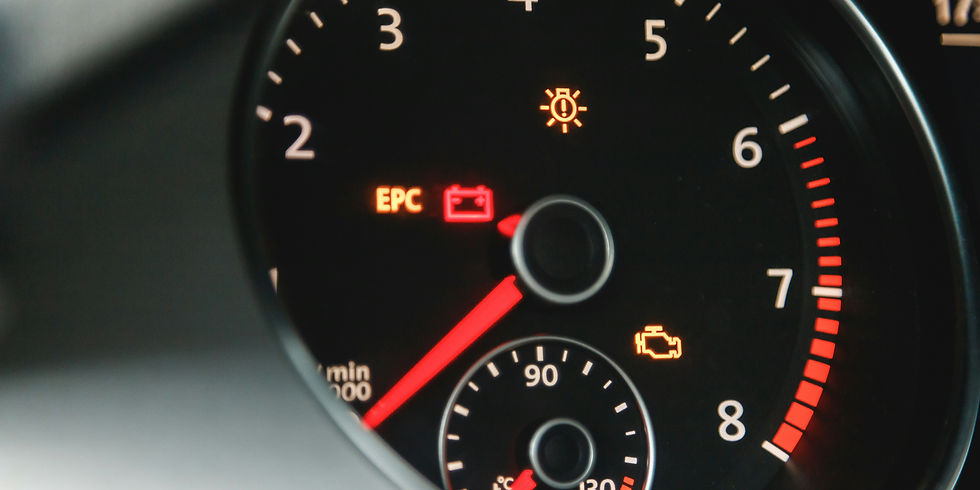
Unfortunately, your dashboard lights are not suggestions. Some mean "book this into a garage when you can" and some mean "stop driving immediately before you turn a minor issue into a financial crisis."
If you're ever unsure, pull over somewhere safe and check your vehicle handbook. Google is useful, but your handbook is literally designed for your exact car.
Some of the most common warning lights you'll come across are:
Oil Warning Light
If this appears, your car may be low on oil or there could be an issue with oil pressure. Oil helps lubricate your engine, so this isn't something you want to ignore. Continuing to drive could cause serious engine damage.
Engine Management Light
Usually an orange engine-shaped symbol.
This one can mean a range of things, from a minor sensor issue to something more serious. Your car will often still drive normally, but it's worth getting checked as soon as possible rather than hoping for the best.
Tyre Pressure Warning Light
This often looks like a horseshoe shape with an exclamation mark in the middle.
It means one or more of your tyres may have low pressure. Sometimes it's a slow puncture, sometimes it's simply because the weather has changed. Either way, it's worth checking before setting off on a long journey.
Engine Temperature Warning Light
Usually represented by a thermometer over some wavy lines.
If this comes on, your engine may be overheating. Pull over somewhere safe as soon as possible and allow the engine to cool down before investigating further.
Battery Warning Light
This doesn't necessarily mean your battery is dead. It can indicate a problem with the charging system itself. If this light appears while you're driving, it's worth getting checked quickly because your vehicle may eventually lose power.
The good news is that you don't need to become a mechanic overnight. You just need to recognise when your car is trying to tell you something.
Filling Up Fuel
Nobody prepares you for the mild panic that comes with filling up a car for the first time.
"Is it petrol or diesel?"
"Which petrol?"
"Why are there three different nozzles?"
"Am I supposed to pay first or after?"
"What if it overflows?"
"What if everyone is watching me?"
"What side is my petrol tank on?"
The first thing you need to know is whether your car takes petrol or diesel. This information will usually be written inside the fuel flap, in your handbook or somewhere on the dashboard display.
Once you've established that, you'll probably notice there are still multiple options. Most petrol stations offer standard fuel alongside premium versions. Unless your vehicle specifically requires premium fuel, most drivers are absolutely fine using standard petrol or diesel. The difference between the two is simply that premium fuels are designed to improve performance and efficiency in certain vehicles. But, for most everyday drivers, the difference is unlikely to be noticeable enough to justify the extra cost. If you're unsure, your vehicle handbook will tell you what fuel is recommended.
When you enter a petrol station, it quickly becomes habit which side your fuel cap is on. Most nozzles will reach across the car anyway, so it doesn’t technically matter which side you pull up on. But if you’re like me and want to get it right first time, there’s an easy trick you can use without even getting out of the car.
First, look at the fuel gauge on your dashboard. Next to the fuel pump symbol, there is usually a small arrow pointing either left or right. That arrow tells you which side of the car your fuel cap is on.
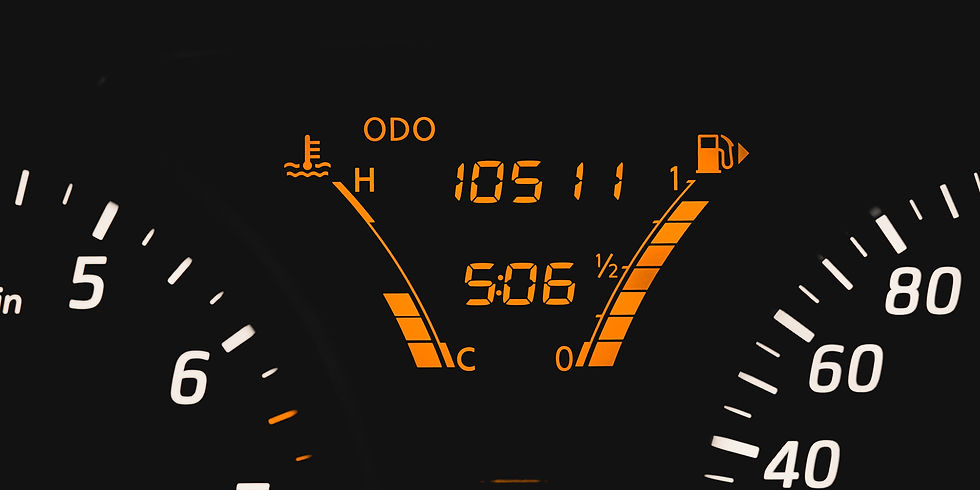
As for overfilling the tank, don't worry. The pump automatically stops when the tank is full. You don't need to stand there trying to calculate how much fuel your car can hold.
The only remaining challenge is figuring out whether you're paying at the pump or inside the petrol station.
And yes, everyone feels awkward the first few times. The difference is that experienced drivers have simply had more opportunities to look confused.
Motorways Are Their Own Little World
Passing your test doesn't magically make motorway driving not terrifying. The first time I joined a motorway, it was a complete accident. But I got on with it, didn't panic and, hey, I'm still here, right?
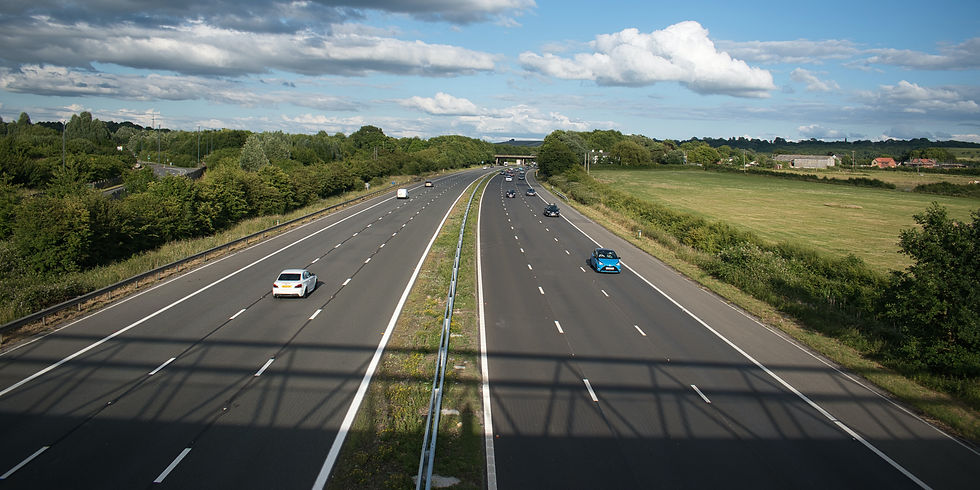
Slip Roads
One of the biggest things to remember is that a slip road isn't simply there to connect you to the motorway. It's designed to give you enough distance to match the speed of the traffic already travelling on it.
For some reason, this feels a lot scarier in practice than it does in theory.
Building Speed Before Joining
When joining a motorway, it's important to build up speed on the slip road before merging. Trying to join too slowly can actually make things more difficult because the vehicles already on the motorway are travelling much faster than you are. The goal is to join the flow of traffic smoothly, rather than forcing other drivers to brake or move around you.
Lane Discipline
Once you're on the motorway, lane discipline becomes important.
As a general rule, you should be driving in the left-hand lane unless you're overtaking. After overtaking, move back into the left lane when it's safe to do so. Think of the other lanes as passing lanes rather than permanent homes. And remember, there is no such thing as the "fast lane".
Middle Lane Hoggers
Please, please - don't be this person!
Despite what some drivers seem to believe, the middle lane is not a permanent residence. Sitting in the middle lane when the left lane is clear can create unnecessary congestion and frustration for other drivers. It's one of the most common complaints people have about motorway driving, and once you've been driving for a while, you'll probably find yourself complaining about it too.
Watching Road Signs
Motorway signs often give you much more information than your sat nav.
Pay attention to advance warning signs for exits, services and lane closures. The earlier you know what's coming up, the less likely you are to find yourself making rushed decisions. Additionally, they help you stay in the right lane for your destination, as opposed to exiting too early or missing your exit altogether. Sat navs often can't give you that information.
Not Relying Entirely On Sat Nav
Sat navs are fantastic, but they're not perfect.
Occasionally they seem to announce an exit at the exact moment you're passing it. They're a useful tool, but they shouldn't be your only source of information. Using road signs alongside your sat nav will usually make your journey much less stressful.
Reading Lane Markings
One thing people seem to forget is how much information is actually painted on the road itself. Lane markings often tell you exactly where each lane is going long before you reach a junction. If you get into the habit of looking ahead, you'll often know which lane you need before your sat nav or even road signs tell you.
Following Overhead Signs
Overhead gantry signs are your friend.
They'll often show which lanes continue straight ahead, which lanes lead to exits and whether there are any restrictions or incidents further along the road. A quick glance at these signs can save you from a last-minute scramble across multiple lanes.
Last-Minute Lane Changes
If you're changing lanes because an exit is approaching, do it early.
The later you leave it, the more pressure you'll put on yourself, and that's when mistakes happen. A few extra minutes added to your journey is always better than making a dangerous manoeuvre because you panicked.
Accidentally Ending Up Somewhere Random Because You Missed Your Exit
It happens to everyone.
At some point in your driving career, you will miss a junction, ignore the sat nav's instructions by accident, or find yourself heading towards a town you had absolutely no intention of visiting.
When it happens, stay calm.
If you've missed your junction, you've missed it. Carry on safely and let the sat nav reroute you. Missing a turn is inconvenient, but causing an accident because you desperately wanted to make that turn is considerably more inconvenient.
Like my Grandma says, "I'd rather you get there late than not at all."
Nobody Talks About Car Parks Enough
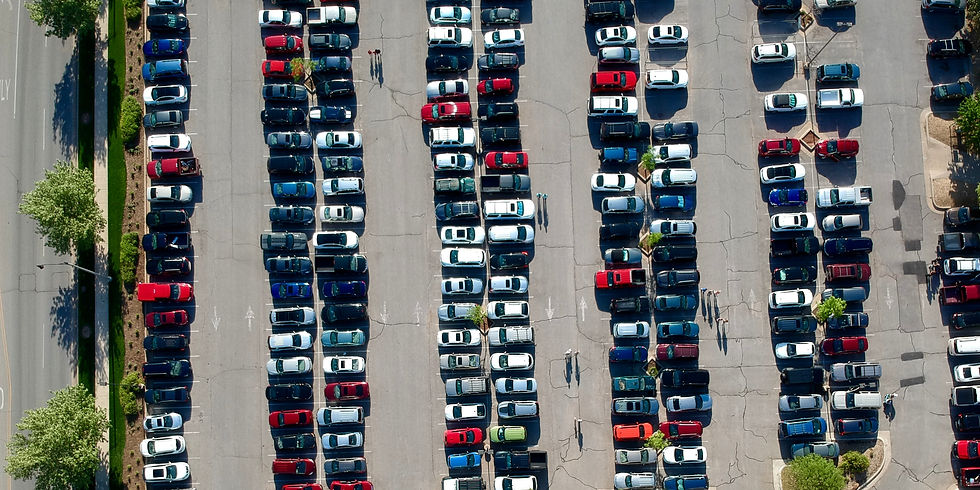
Passing your driving test proves you can park, at least in some capacity.
I don't know what it is about them, but the moment I enter a multi-storey car park, every bit of confidence I have immediately disappears. The spaces suddenly seem smaller, the ramps are never ending, the pillars seem closer and somehow there is always somebody waiting to drive past while you attempt a seventeen-point turn.
And then there's the challenge of actually finding your car afterwards.
You know when you think, "I'll definitely remember where I parked"?
You won't.
Take a photo. Trust me.
The same applies to drive-throughs. Nobody warned me that judging the width of my car while simultaneously trying to order food would become a life skill. There is nothing quite like leaning halfway out of your window because you've parked too far away from the speaker.
Even now, I occasionally find myself oversteering into parking spaces or pulling up wonky and having to straighten up. The difference is that after you've been driving for a while, you realise everyone else is doing the exact same thing. I mean, how often have you been severely annoyed, or judged another driver for manoeuvring into a space?
Shortly after I'd passed my test, I was struggling to get into a space. I felt so embarrassed, the stress made it ten times worse. But, a man got out of his car, and told me to give myself more room. He helped me manoeuvre in, and then reminded me that "you have as much right to the road as anyone else." And that stuck with me. Every single person on the road takes time to manoeuvre sometimes. Or makes mistakes. And it's easy to forget that when you are struggling.
Most drivers are just making it up as they go along and hoping nobody notices. And you know what? I never do.
The First Time You Get A Parking Ticket
Unfortunately, even if you manage to perfect your manoeuvre technique, there will be a time that you receive a parking ticket. It's life.
Parking restrictions can feel like they're written in an ancient language. Residents-only bays, permit holders only, loading bays, pay-by-phone apps, restrictions between certain times but not others...
Sometimes it feels like you need a law degree just to leave your car somewhere.
The frustrating thing is that most parking tickets don't come from people trying to park irresponsibly. They come from people misunderstanding a sign, forgetting to extend a parking session, or genuinely thinking they were allowed to park somewhere.
If you do get a parking ticket, don't immediately panic.
Read the notice carefully, keep any evidence you might need if you think it has been issued incorrectly, and check the appeals process. Sometimes the ticket is valid and you simply have to take the loss. Other times, mistakes do happen.
Unfortunately, "I was only gone for five minutes" tends not to be considered a strong legal defence.
Now, I won't sugar coat this. When you try to dispute a parking ticket, a lot of the time, they come back to you within 14 days... because, if your dispute is disputed itself, you then have to pay the entire fine, as opposed to the 14 day discount window. So, make sure you have a strong case against it, because otherwise it could be more costly.
I'd just be glad it's not adding points to my licence.
The First Time You Get Caught Speeding
I'm not going to sit here and state that you shouldn't speed. We all know this. And most people don't intentionally speed.
Usually, you're concentrating on traffic, following the flow of vehicles around you, or you've missed a speed limit change while trying not to miss your turning.
There are largely 4 ways UK drivers are caught speeding:
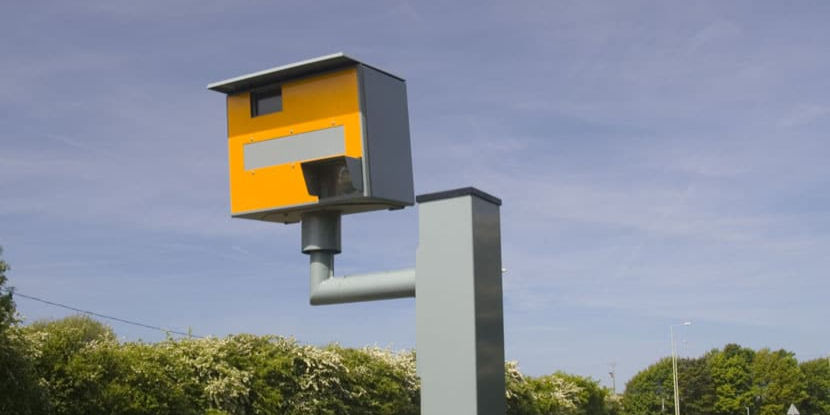
Fixed Speed Cameras
Your traditional yellow static cameras, that calculate your speed and take images if you are thought to be going over the limit.
Average Speed Cameras
These are frequently used on motorways and in roadwork zones. They calculate the exact time it took to travel the distance to determine your average speed over that stretch of road.
Mobile Speed Units
These are typically police vans or officers stationed on the roadside using laser, radar, or handheld speed guns. As they are mobile, the whereabouts of these can change several times within one day.
Direct Police Patrols
Police officers actively patrolling in marked or unmarked vehicles can catch speeders by pacing (following your car at a set distance to gauge your speed) or by using onboard laser devices. If caught, you will usually be pulled over on the spot for an immediate assessment.
If you are caught speeding, don't panic.
Depending on the circumstances, you may receive a Notice of Intended Prosecution through the post. The first step is declare you were the driver (obviously, only if you were!) It feels weird to essentially 'plead guilty', but if you don't, the pitfall will be worse.
Depending on the speed you were doing, you may be offered a speed awareness course. You can take these once every 3 years, which is how long any points you accrue will stay on your licence for. The general criteria for being offered a speed awareness course is:
20 mph limit: Up to 31 mph
30 mph limit: Up to 42 mph
40 mph limit: Up to 53 mph
50 mph limit: Up to 64 mph
60 mph limit: Up to 75 mph
70 mph limit: Up to 86 mph
Generally speaking, you can be offered a speed awareness course if you are travelling between 10% + 2 mph and 10% + 9 mph over the speed limit. But this is entirely at the police's discretion for the area you were caught in. Most UK counties have a tolerance for being a few mph over the speed limit due to speedometers in cars not being 100% accurate, but this varies county and to county (and obviously you should be driving at the correct speed anyway).
If you are offered this course, you must book and pay through the portal they provide you with, entering the relevant information from your correspondence. These courses cost around £100, but interesting to note that you don't have to book the course with an organisation in the county you were caught in - as long as they're listed on the portal, you're fine. You get a choice of online or in person, and while courses can vary (some longer, some shorter, some make you complete a 'workbook' before hand, etc), on average they are around 3 hours long with a 10/15 minute break, and not nearly as gruelling as you might imagine.
If you are not offered a course, or choose not to take it, you will likely receive a £100 fine and penalty points on your licence (normally 3, but depending on your speed, it could be 6).
For newer drivers, this can be particularly important because points can have bigger consequences in the first couple of years after passing your test. If you have 6 points on your licence in the first 2 years after passing, you will go back to having a provisional and you must take your driving test again.
If you are caught speeding, the best thing you can do is deal with it promptly and honestly.
That said, the easiest speeding ticket to deal with is the one you never get. Checking your speed every now and then might feel annoying, but it's significantly cheaper than discovering a camera was paying attention when you weren't.
Buying A Car Is Confusing
When I bought my first car, I genuinely thought the process consisted of three steps:
Find a car.
Like the car.
Buy the car.
Apparently there are approximately 4,000 additional things you're supposed to consider.
Mileage, service history, insurance groups, engine size, fuel type, reliability ratings, ULEZ compliance, MOT history...

Suddenly you're comparing numbers and abbreviations you've never heard of before.
One thing that helped me was understanding that around 10,000 miles per year is often considered average usage. A car that is ten years old with 50,000 miles on it will likely be more reliable than a ten-year-old car with 150,000 miles on it.
Then there are different types of cars altogether. Hatchbacks, saloons, estates, SUVs. I didn't even know what that meant, so here's a rough guide:
Hatchback
A hatchback is your typical smaller car, like a Ford Fiesta. They're often cheaper to insure, easier to park and a popular choice for first-time drivers.
Estates
Estates are essentially hatchbacks with a much larger boot, making them useful if you need extra space.
Saloons
Saloons tend to have a separate boot compartment and are often slightly larger.
SUVs
SUVs sit higher off the ground and usually offer more space inside.
Fun fact: Sales of estate cars have completely bottomed out since the introduction of SUVs!
Then there are engine sizes. You might see a car advertised as a 1.0 litre, 1.2 litre, 1.6 litre or even larger. Generally speaking, bigger engines can mean more power, but they can also mean higher insurance costs, higher road tax and more expensive fuel bills. That's not always the case, but it's something worth considering if you're trying to keep costs down.
You also need to think about fuel type. Petrol and diesel are the obvious options, but more and more cars are now hybrid or electric. If you regularly drive through cities, it's worth checking whether a vehicle is ULEZ compliant too, otherwise you could find yourself paying additional charges just to drive somewhere.
What started as "I like the blue one" quickly becomes a research project.
What Even Is Category S Or Category N?
While searching for cars, you might come across terms like Category S or Category N.
The first time I saw them, I simply nodded as though I understood.
I did not.
Category A – The vehicle is so badly damaged that it must be crushed completely. No parts can be salvaged.
Category B – The vehicle itself must be crushed, but some parts can be removed and reused.
Category S – The vehicle has suffered structural damage (damage to the frame, chassis, or other structural parts) but can be repaired and returned to the road.
Category N – The vehicle has suffered non-structural damage. This could include electrical issues, bodywork damage, or other repairs that don't affect the vehicle's structure.
If the car you're looking to buy has a category attached to it, it is usually S or N, which means they have usually been repaired.
Neither automatically means the vehicle is bad, unsafe or shouldn't be bought. It simply means you need to do your homework, understand the vehicle's history and make sure you're comfortable with what happened before handing over your money.
Fun Fact: Your Tax Doesn't Come With The Car
This is one of those things that feels incredibly obvious once somebody tells you.
If you buy a car, the previous owner's vehicle tax does not transfer over to you.
The MOT stays with the vehicle.
The tax does not.
It used to, back when road tax consisted merely of a paper disc displayed on your windscreen it used to transfer to the next owner until the year was up, but since the introduction of digital, this is no longer the case. Digital road tax does now mean that it is purchasable in either 6 or 12 month tranches though! So, before you excitedly drive off into the sunset in your new car, make sure it's properly taxed in your own name.
Another useful thing to know is that if you take your car for an MOT before the current MOT expires and it fails, the existing MOT is generally still valid until its original expiry date.
It's one of those pieces of information that's completely irrelevant until the exact moment you need it, which believe me, has saved me from not being able to drive.
Maintenance Costs
When you’re buying a car, it’s very easy to focus on the price of the car itself and forget that the spending doesn’t stop once you drive it away.
Cars don’t just have a purchase price - they have a “how much is this going to cost me every month without warning” price. Also known as maintenance costs.
Maintenance costs are everything from routine servicing to the little things that add up over time. Things like:
Servicing (usually once a year)
MOT repairs if something fails
Tyres (which always seem to wear out at the worst possible time)
Brake pads and discs
Oil top-ups and fluid changes
Unexpected warning light investigations
Common problems known with particular brands
And then there are the “small but annoying” costs - the £20 here, £60 there moments that don’t feel like much individually but definitely feel like something when you add them up over a year. So it's worth knowing if the particular car you're looking to buy has had frequent repairs, and whether you'll have to carry them on. It's also worth knowing how much common repairs and replacement parts will costs.
The tricky part is that some cars are simply more expensive to maintain than others. A cheaper car upfront doesn’t always mean cheaper overall, especially if parts are expensive or it needs more frequent repairs.
A good rule of thumb is to ask yourself: “Could I afford this car if it needed £500 tomorrow?”
Because sometimes it will.
It’s not about expecting the worst, it’s just about making sure you’re not caught out by it.
Most people don’t think about maintenance costs when they’re looking at a car for the first time. I definitely didn’t. I was too busy deciding whether I liked the colour and if it “felt like me”.
Turns out cars are less about personality and more about budgeting. Unfortunately.
How Do You Know When It's Time For A New Car?
At some point, every car owner starts asking the same question:
Do I fix it, or do I replace it?
There's no perfect answer.
Sometimes a repair bill arrives that's worth more than the car itself. Sometimes the breakdowns become more frequent than your trips to the supermarket. Sometimes your circumstances change and you need something bigger, smaller, cheaper or more economical.
And sometimes you're simply tired of wondering what warning light is going to appear next.
No one can give you a definitive answer but you, and when you feel you either want/need a new vehicle, or if it would make more financial sense in the long run to buy again.
Whether you passed your driving test six months ago or six years ago, there will always be something new to learn when it comes to owning a car.
One day you're confidently driving to work, and the next you're staring at a warning light that's suddenly appeared and hoping it disappears if you ignore it for long enough.
The reality is that driving and car ownership are two completely different things.
Learning to drive teaches you how to control a vehicle, follow the rules of the road and pass a test. Owning a car teaches you everything else.
How to deal with breakdowns.
How to read parking signs.
How to navigate a motorway without blindly trusting your sat nav.
How to decide whether a repair bill is worth paying.
And occasionally, how to admit that you have absolutely no idea what's going on and need to ask for help.
So if you've ever found yourself Googling a warning light, calling your dad from a car park, or pretending you understand what a mechanic is talking about when you absolutely don't, you're in good company.
You're having the same experiences that every driver has at some point or another – nobody talks about them until they happen to you.
Despite what it might look like, most people aren't born knowing this stuff.
They've just had more opportunities to learn it.
Comments