Why Is Everyone Talking About Social Media Right Now?
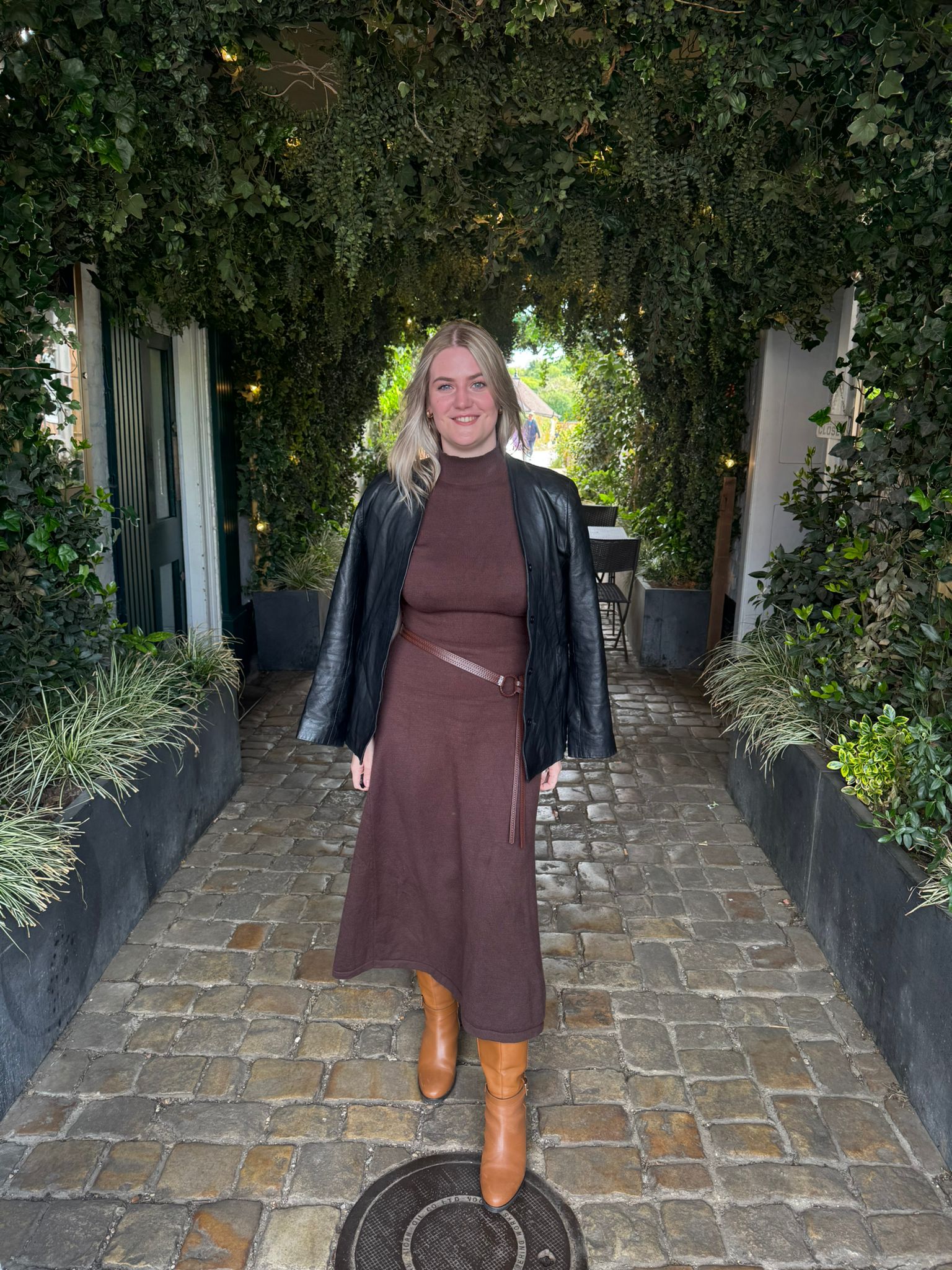
The UK government has announced plans to ban under-16s from major social media platforms including TikTok, Instagram, Snapchat, Facebook, YouTube and X, in what has been described as an "Australia Plus" approach because it goes further than Australia's existing legislation. The government argues the restrictions are necessary to protect children's wellbeing and online safety.
The ban would rely heavily on age verification, although platforms such as WhatsApp, Twitch and Discord are not currently set to be impacted.
As expected, the proposal has sparked plenty of debate. Some people think it's a necessary step to protect young people online. Others believe it should be up to parents, not the government.
But it got me thinking.
The negative effects of social media don't suddenly disappear when you turn sixteen. Plenty of adults struggle with doomscrolling, comparison and spending far more time online than they intended to.
So, if more and more people in their twenties are choosing to take social media breaks, is life actually better offline? Or has social media become too intertwined with modern life for most of us to realistically step away from it?
Should You Take A Social Media Break?
Many of my friends have started taking social media breaks. Some have deleted apps for a few weeks. Others have gone a step further and deleted their accounts altogether.
And honestly? Most of them seem pretty happy about it.
The never-ending doom-scroll has been replaced with meaningful conversations, meeting friends and family in person, reading books, listening to podcasts and consuming content more intentionally rather than endlessly refreshing feeds.
It's not just the doom-scrolling either.
There's the pressure to reply to messages instantly because everyone can see when you've been online. The feeling that if you don't check your phone for a few hours, you'll somehow miss something important. The fact you can open Instagram to reply to one message and somehow emerge forty-five minutes later having watched seventeen videos, looked at three holidays you'll never book and convinced yourself you need a new air fryer.
Then there's comparison.
Not necessarily in the stereotypical "I wish I looked like that" way people often talk about, but the simpler comparisons. Someone gets engaged. Someone buys a house. Someone lands a promotion. Someone is travelling South East Asia.
And even when you're genuinely happy for them, it can sometimes feel like everybody else has their life figured out while you're still trying to decide what to have for dinner.
Or, as Jack Whitehall once joked, your mouth says, "Good for you," while a less charitable part of your brain is thinking something entirely different.
Because deep down, most of us don't necessarily want everyone to be living their best life. We want them to be living a "#slightlysh*ttierlifethanours".
It's ridiculous, of course. But social media has a funny way of turning other people's milestones into a scoreboard you never actually agreed to take part in.
It also has a habit of making everything feel urgent. You feel pressure to engage in activities, or do something that you actually have no need to be doing. It is like Disney Land; the moment you enter you're hit with different rides, games, stalls and restaurants. There are so many sights, and sounds and smells and lights... so much is going on that your brain can't process it all and you get overwhelmed.
Every news story. Every opinion. Every trending topic. Every internet argument.
Sometimes it's difficult to switch off when the entire world is effectively sitting in your pocket.
Social media means we're constantly connected to people, news and events from all over the world. While that's incredible in many ways, it can also be exhausting because we're never really able to switch off.
Sometimes it feels as though there is always something demanding our attention.
So maybe there is something to be said for stepping away occasionally and giving your mind a reset.
I understand the appeal.
And that's largely why so many people seem to enjoy taking a break from it.
They often describe feeling calmer. More present. More focused on what's actually happening in their own lives rather than what everyone else is doing.
Whether that's because they've escaped the comparison trap, stopped consuming a constant stream of information, or simply reclaimed a few hours of their day, the result seems fairly consistent.
They don't tend to regret taking the break.
But then comes the obvious problem.
Is taking a break from social media actually realistic anymore?
For many of us, social media isn't just somewhere we go when we're bored anymore. It's become woven into everyday life.
It's where businesses market themselves. Where people network professionally. Where events are advertised. Where many of us keep up with the news. It's where creators build careers and small businesses find customers.
In some industries, not having social media can almost feel like you're making life harder for yourself.
Then there's the educational side of things.
YouTube, for example, is included in the proposed ban. Yet it was one of the biggest learning tools available throughout my school years. Whether it was GCSE revision videos, science experiments, maths tutorials or essay-writing advice, there was almost always a video explaining something better than a textbook ever could.
Of course, there are books, articles and educational websites. But not everyone learns in the same way.
Personally, I'm not somebody who can simply read information once and remember it. I need to see it, hear it, write it down and interact with it before it properly sticks. Video content played a huge role in that process for me, and I know I'm not alone.
Research has also found that over 40% of Gen Z turn to social media over traditional search engines first.
That could be looking for restaurant recommendations, product reviews, travel advice, career tips or tutorials, and anything few and far between. Many people, myself included, now trust content from real users more than they trust a list of search results. It feels less overwhelming, more enjoyable and much more trustworthy.
It's also interesting that while platforms such as Instagram, TikTok, Facebook, YouTube and X are included in the proposed restrictions, others such as WhatsApp, Discord and Twitch are not.
That raises an interesting question in itself.
Where exactly do we draw the line?
Is social media simply somewhere you post photos? Is it somewhere you communicate with friends? Is it somewhere you learn? Is it entertainment?
Because for most people, it's all of those things at once. And that's what makes the debate so complicated.
Many people argue that stronger protections for young people are needed. Others believe the responsibility should sit with parents rather than governments, with stronger parental controls offering a more practical solution. Some have also raised concerns about age verification and what information adults (and children aged 16/17) may eventually be required to provide online.
But is social media a bad thing?
For all the criticism social media receives, it's worth asking whether it's actually the villain it's sometimes made out to be.
Because while there are plenty of people deleting apps and taking digital detoxes, there are just as many people who feel social media has had a positive impact on their lives.
According to Sprout Social, 60% of social media users say social platforms have had a net positive impact on their mental health over the past six months, compared to just 18% who say the impact has been negative. That number rises to 68% for Millennials and 71% for Gen Z.
It's also difficult to ignore the opportunities social media creates.
Entire businesses have been built on Instagram, TikTok and YouTube. People have found jobs through LinkedIn, launched side hustles through social platforms and connected with people they otherwise never would have met.
It's also worth acknowledging that social media today looks very different to the version many people picture when they hear the word "Instagram".

Of course, the heavily filtered photos, perfectly curated feeds and highlight reels of people's lives still exist. Personal profiles often still showcase the best moments rather than the full reality, and it's easy to fall into the trap of comparing your everyday life to somebody else's carefully selected highlights.
But audiences have changed too.
Increasingly, people are gravitating towards content that feels more authentic, relatable and useful. Raw, unedited videos often outperform highly polished content. Creators are sharing the realities behind the highlights, opening up conversations around mental health, careers, relationships and everyday struggles. Others are using social media to learn new recipes, develop skills, discover hobbies, improve their fitness or access educational content they may never have encountered otherwise.
In many ways, social media has evolved from being purely about presenting a perfect life to becoming a place where people seek connection, entertainment, education and community.
That said, the opposing argument is that while the content may have changed, the underlying issues haven't necessarily disappeared.
Comparison still exists. Unrealistic expectations still exist. Endless scrolling still exists.
Even when content is more authentic, social media platforms are ultimately designed to keep our attention for as long as possible. For some people, that can make it difficult to switch off, be present in the moment or avoid spending far more time online than they originally intended.
So while social media may be moving away from the stereotypical "Instagram filter" era, critics would argue that the challenge isn't just what we're looking at - it's how much of it we're consuming.
The reality is that social media itself isn't inherently good or bad. Like most things, it depends on how it's being used.
For some people, it's a source of comparison, distraction and information overload. For others, it's a place to learn, connect, create and grow.
Perhaps the issue isn't social media itself, but whether we're controlling it or allowing it to control us. Whatever side of the debate you sit on, one thing seems clear: social media isn't going anywhere any time soon.
The real question isn't whether social media is good or bad. It's whether we're using it intentionally. And the more people I speak to, the less it seems to be about deleting every app on your phone forever.
Instead, it's about creating boundaries. Not checking your phone the second you wake up. Not spending two hours scrolling when you only meant to check one notification. Not allowing every spare moment to be filled with somebody else's thoughts, opinions or content.
Maybe taking a break from social media isn't really about leaving the internet behind.
Maybe it's about proving to yourself that you can.
What We Know About The Proposed Ban:
The UK government is currently considering new rules that could restrict social media access for under-16s. The details are still being developed, so the final law may change.
The proposal focuses on using age-verification systems to limit access to major platforms such as:
TikTok
Instagram
Facebook
Snapchat
YouTube
X (formerly Twitter)
Threads
Some services, including WhatsApp, Discord, Twitch, and Reddit, are not currently expected to be included, as they are seen more as communication or community platforms rather than traditional social networks.
One of the biggest talking points is how age verification would actually work in practice. Supporters argue that stronger verification is necessary for the rules to be effective, while critics raise concerns about privacy, data collection, and whether adults and children over 16, may eventually need to provide more personal information to access online services. The proposal has also been described by some commentators as an “Australia Plus” approach because it goes further than Australia’s existing legislation.
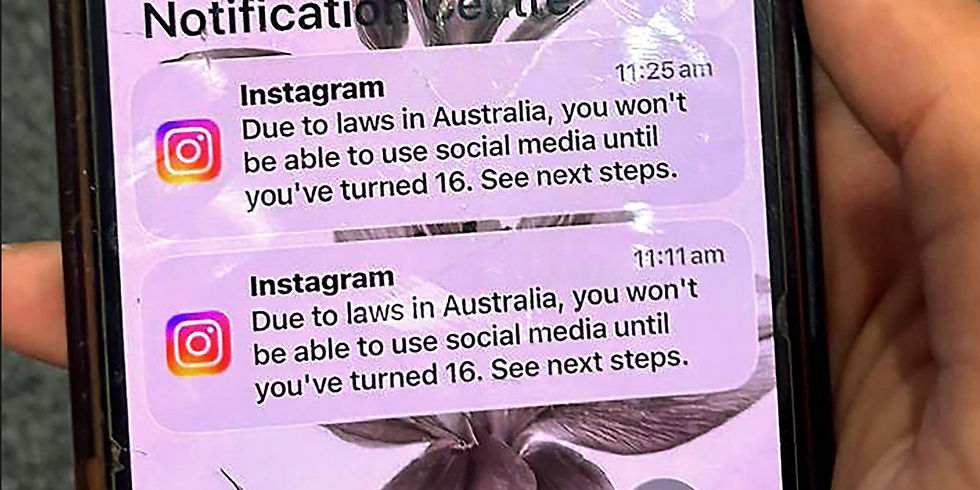
Australia introduced under-16 social media restrictions in 2024, but the long-term impact is still unclear. Early feedback from parents has been mixed. Some say the rules have reduced peer pressure and made conversations about online safety easier, while others argue that teenagers are already finding ways around the restrictions using alternative accounts, older users, or other platforms. There are also concerns about social isolation, with some parents reporting that teenagers feel excluded from friendship groups that organise primarily through social media, while others believe the limits encourage healthier online habits and reduce excessive screen time.
At present, the debate is less about whether social media can be harmful and more about who should be responsible for managing that risk: governments, technology companies, parents, schools, or a combination of all four.
Comments